



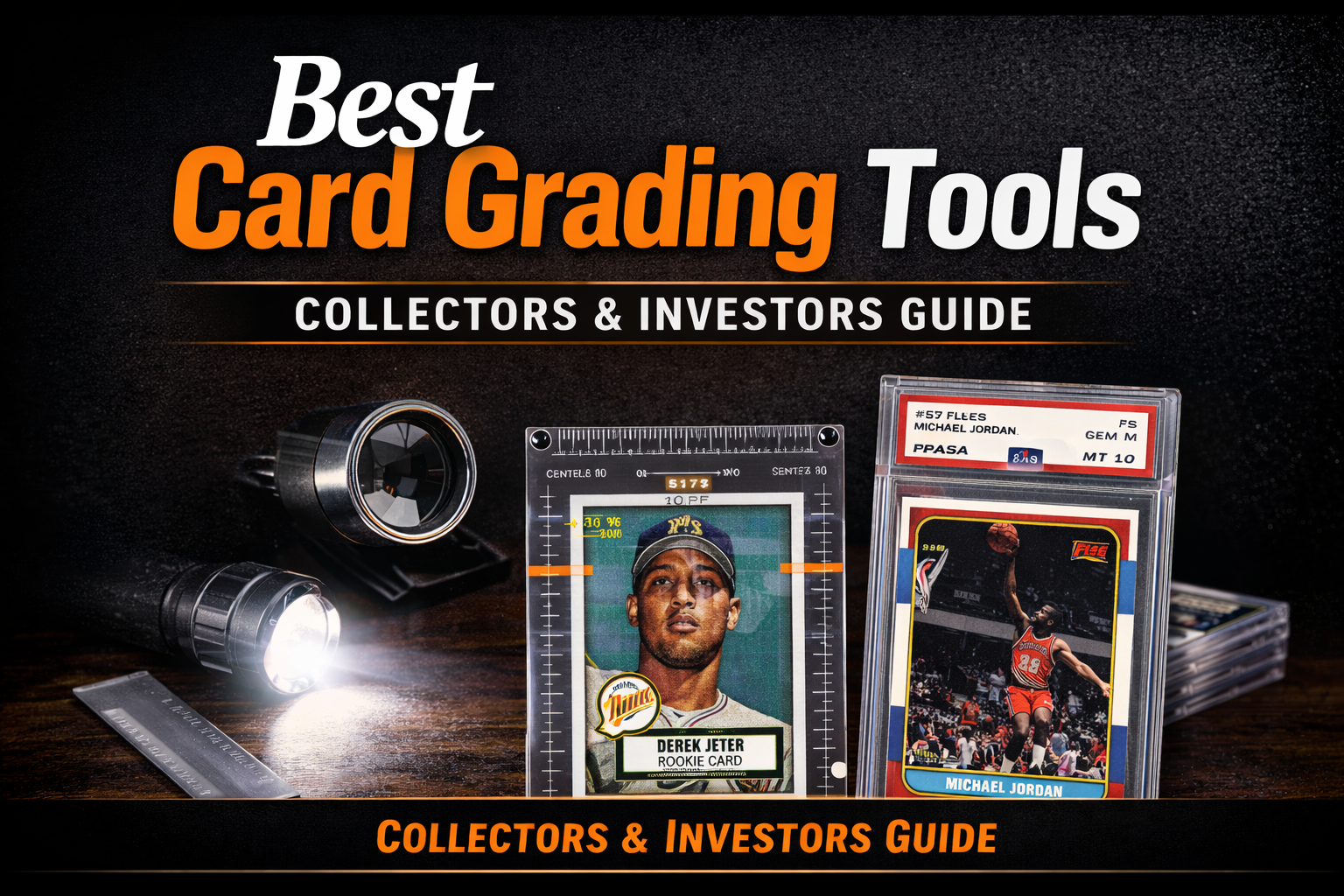
Card grading has become one of the most important aspects of the modern sports card hobby.
Professional grading companies such as PSA, SGC, BGS, and CGA authenticate and evaluate trading cards, assigning grades that can significantly impact their market value.
For many collectors and investors, grading cards is one of the most effective ways to increase the value of a collection.
However, submitting cards for grading without proper evaluation can be risky. Cards with poor centering, surface damage, or other flaws may receive lower grades than expected, making the submission unprofitable.
To improve their chances of receiving high grades, collectors often use a variety of tools to inspect and analyse cards before submitting them for grading.
In this guide we explore some of the best tools for card grading, from centering measurement tools and magnification equipment to modern AI-powered grading analysis platforms.
1. GCA AI Card Grader
Best For: Grading ROI analysis and submission decisions
The GCA AI Card Grader is a digital grading analysis tool designed to help collectors evaluate whether a card is worth submitting for grading.
Rather than relying solely on visual inspection, the tool combines card condition analysis with market data to estimate potential grading outcomes and profitability.
Collectors can upload card details or images and receive insights about potential grading ranges, estimated market value, and possible return on investment.
Key Features
• grading outcome estimates
• grading ROI calculations
• card market value analysis
• submission decision insights
Why Collectors Use It
Many collectors lose money on grading submissions because they underestimate grading risks or overestimate potential grades.
Tools like the GCA AI Card Grader help collectors make more informed decisions before sending cards to grading companies.
2. Card Centering Tools
Best For: Measuring card centering
One of the most important factors grading companies evaluate is centering.
If the borders on a card are uneven, the grade can drop significantly.
Collectors often use physical centering tools to measure border ratios and estimate whether a card is within grading standards.
Key Features
• centering measurement guides
• quick border ratio analysis
• portable inspection tools
Why Collectors Use Them
Centering is one of the easiest grading factors to evaluate before submission.
Using a centering tool helps collectors avoid submitting cards that have little chance of receiving high grades.
3. Inspection Lights
Best For: Detecting surface flaws
Surface condition is another critical grading factor.
Many collectors use specialised inspection lights to reveal scratches, print defects, and surface damage that may not be visible under normal lighting.
Strong LED inspection lights can help reveal flaws that would otherwise be missed.
Key Features
• bright focused lighting
• glare detection
• surface scratch visibility
Why Collectors Use Them
Surface flaws often determine whether a card receives a PSA 10 or a lower grade.
Proper lighting helps collectors detect imperfections before submitting cards.
4. Magnification Tools
Best For: Inspecting edges and corners
Magnification tools allow collectors to examine cards more closely.
Small imperfections on corners or edges can reduce a card’s grade significantly.
Collectors often use jeweler’s loupes or magnifying lenses to inspect cards before grading.
Key Features
• high magnification
• portable inspection
• edge damage detection
Why Collectors Use Them
Magnification helps collectors identify small flaws that may not be visible to the naked eye.
This allows collectors to make better grading decisions.
5. eBay Sold Listings
Best For: Market value research
One of the most overlooked grading tools is market research.
130point is an Online platform which users can search up sold listing from eBay.
Before submitting a card for grading, collectors should research recent sales of graded versions of the card.
This helps determine whether the grading submission is financially worthwhile.
Key Features
• real sales data
• price comparison tools
• demand indicators
Why Collectors Use It
Understanding the market value of graded cards helps collectors estimate potential profits before submitting cards.
6. CardVault
Best For: Tracking graded card performance
Collectors who regularly grade cards often need tools to track the performance of their graded inventory.
Platforms like CardVault allow collectors to monitor portfolio value, track graded card performance, and identify potential opportunities within the hobby.
Key Features
• portfolio tracking
• grading ROI analysis
• market alerts
• collection analytics
Why Collectors Use It
Grading cards is often part of a larger investment strategy.
Tracking graded cards over time helps collectors understand how their submissions perform in the market.
How to Decide Whether a Card Is Worth Grading
Collectors often ask whether a specific card is worth sending to a grading company.
The answer usually depends on three key factors:
• card condition
• player demand
• grading costs vs market value
Using a combination of inspection tools and market research can help collectors make more informed decisions.
Learn More About Card Grading Strategy
Collectors interested in learning more about grading strategy and how to profit from grading submissions should also explore additional resources.
👉 Read our guide to the Best Sports Card Books
👉 See our guide to the Best Apps for Sports Card Collectors
Final Thoughts
Grading cards can be one of the most rewarding parts of the sports card hobby.
However, successful grading requires careful evaluation and research.
By using the right tools and understanding grading standards, collectors can improve their chances of receiving high grades and making profitable grading decisions.
Share and get 15% off!
Simply share this product on one of the following social networks and you will unlock 15% off!